Why Kids Love Books About Themselves — The Research Behind It
Personalized children's books aren't just cute — they have real effects on reading motivation, comprehension, and self-esteem. Here's what the research says.
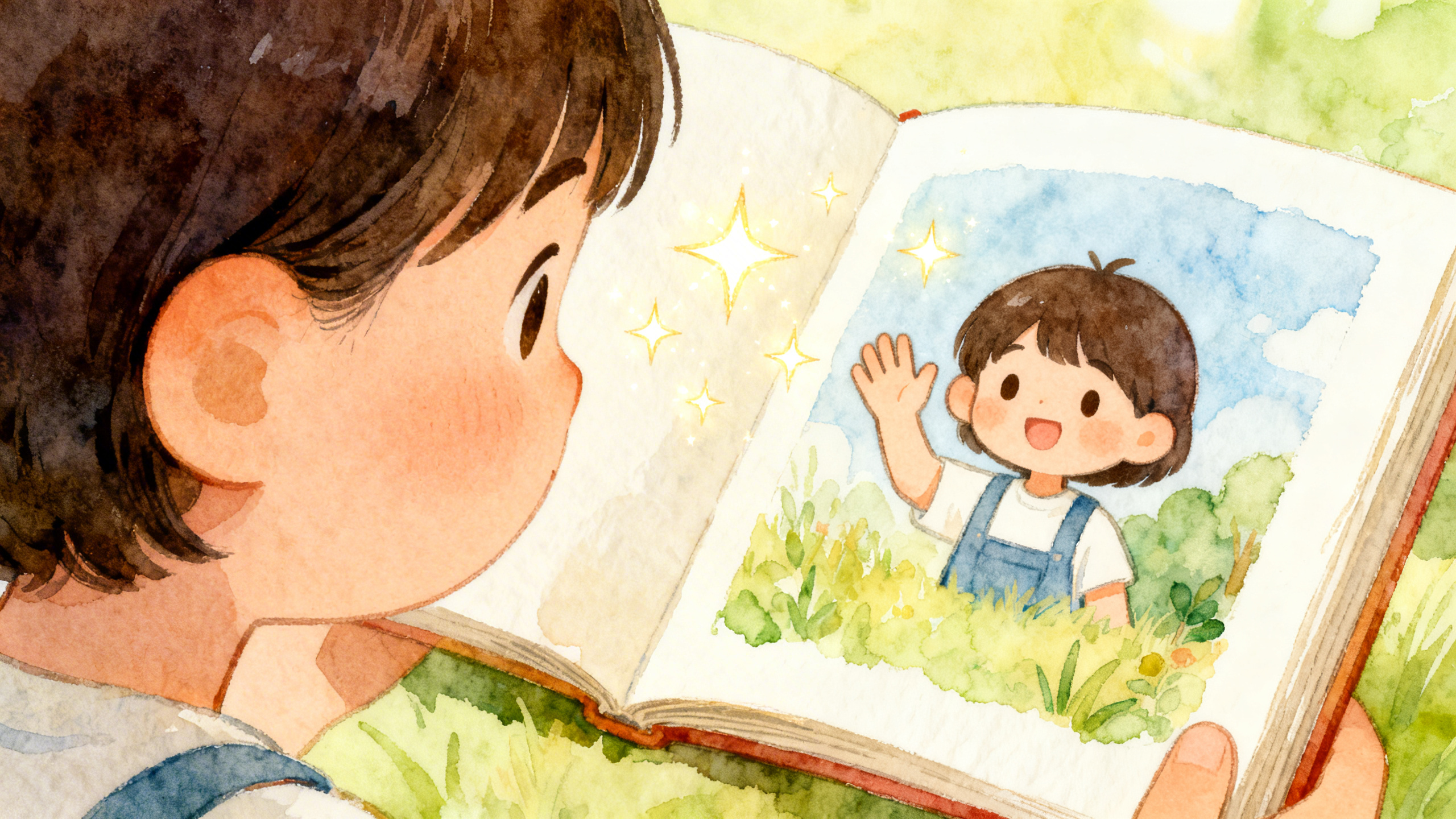
Most parents notice it immediately: when a child discovers that the book is about them, their eyes light up. They want to hear the story again and again. But why? Is it just because it's fun to see their name, or is something deeper going on? Research gives a clear answer.
What research says about personalized books
Studies in developmental psychology show that children engage more deeply with stories where they see themselves. Research from the National Literacy Trust found that children who read personalized books show higher reading enjoyment, stronger identification with the story, and better comprehension compared to children reading standard books.
Researchers at the University of Sussex also found that children aged 3 to 7 remember more of the plot when the main character has their own name. The effect is particularly strong for children who aren't usually interested in books — the personal elements serve as a bridge into the world of reading.
The self-reference effect: Your brain's built-in favorite
In cognitive psychology, there's a well-documented phenomenon called the "self-reference effect." Simply put: we remember information better when it's connected to ourselves. When a child hears "And then Emma climbed the tree" — and the child's name is Emma — deeper cognitive processes are activated than when the main character is a stranger.
This means personalized children's books aren't just nice — they can actually help children remember the story better, understand more, and develop a stronger connection to books as a medium.
Identity and self-esteem
For children between 2 and 6, identity development is one of the most important processes taking place. They're learning who they are, what they can do, and where they belong. When a child sees themselves as the hero of a book — solving problems, discovering new things, and overcoming challenges — it sends a powerful message: you matter, you can do this, and this story belongs to you.
Children who regularly see themselves represented in books develop stronger self-esteem and more positive attitudes toward reading. — National Literacy Trust, 2023
Personalized books as a tool for reading motivation
One of the biggest challenges parents face is getting kids interested in books. Competition from screens is fierce, and it's not always easy to find books that match exactly what your child is interested in. This is where personalized children's books are a unique tool.
When the story is about the child themselves — perhaps based on something they recently experienced, like starting daycare or getting a new sibling — motivation is built in. The child wants to hear the story because it's relevant to them.
- Children who struggle with reading motivation show increased interest with personalized books
- Recognizable elements (names, appearance, situations) lower the barrier to engagement
- Parents report that personalized books more often become the "favorite book" that's read again and again
- The personal connection can be the start of a lifelong love for books
More than just the name
Traditional personalized children's books insert the child's name into a pre-written story. This has an effect, but it's limited. Research shows that the more a child can recognize themselves — appearance, personality traits, life situation — the stronger the engagement.
That's why Fanteri lets you describe your child in detail: hair color, eye color, personality, and interests. The AI builds the story around this, so the child doesn't just see their name — they actually recognize themselves in the illustrations and the plot. It's the difference between "a book with my name" and "a book about me."
Personalized books and difficult topics
Research on bibliotherapy — using books as a therapeutic tool — shows that personalized books are especially effective when children need to process difficult experiences. Grief, divorce, fear of the dark, or moving to a new place — all of these can be addressed through a story where the child is the hero who finds their way through. Read more about children's books about emotions for practical ideas.
When a child sees themselves mastering a difficult situation in a book, it creates a sense of accomplishment and hope that's hard to achieve through conversation alone.
What you can do at home
You don't need to wait for a special occasion to give your child a personalized book. Create a book about something your child is into right now — dinosaurs, spaceships, princesses, or the new puppy. Use it as part of bedtime reading, and notice the difference in engagement.
With Fanteri, it takes under 10 minutes to create a complete personalized children's book with unique illustrations. Try it and see the reaction for yourself.