Children's books that help kids understand emotions
Grief, divorce, starting nursery, a new sibling. Sometimes children need help understanding what's happening around them. A personalized book can be the key.
Children experience big emotions but don't always have the words to express them. When life changes — a pet dies, parents separate, a new sibling arrives, or nursery begins — it can feel overwhelming. Books are one of the most powerful tools parents have to help children understand and cope with what they're feeling.
Why books work better than explanations
When you tell a child "it's normal to feel sad", it can slide right past them. But when the child reads a story about a character experiencing the same thing — and finding a way through it — something different happens. The child identifies with the character, feels understood, and learns indirectly that their feelings are completely normal.
Psychologists call this "bibliotherapy" — using books as a therapeutic tool. Research shows it's particularly effective for children aged 3 to 8, who are in a phase of developing emotional understanding.
When personalisation makes the difference
General children's books about emotions are great. But a book where the child is the main character — where it's Emma or Lucas experiencing the difficult thing and finding safety — hits on a completely different level. The child sees themselves in the story, literally.
Fanteri was actually born from exactly this need. Founder Line Andorsen needed a book to explain to her son Storm why the family dog Kurt was gone. She couldn't find anything flexible enough or with good enough quality. So she built Fanteri.
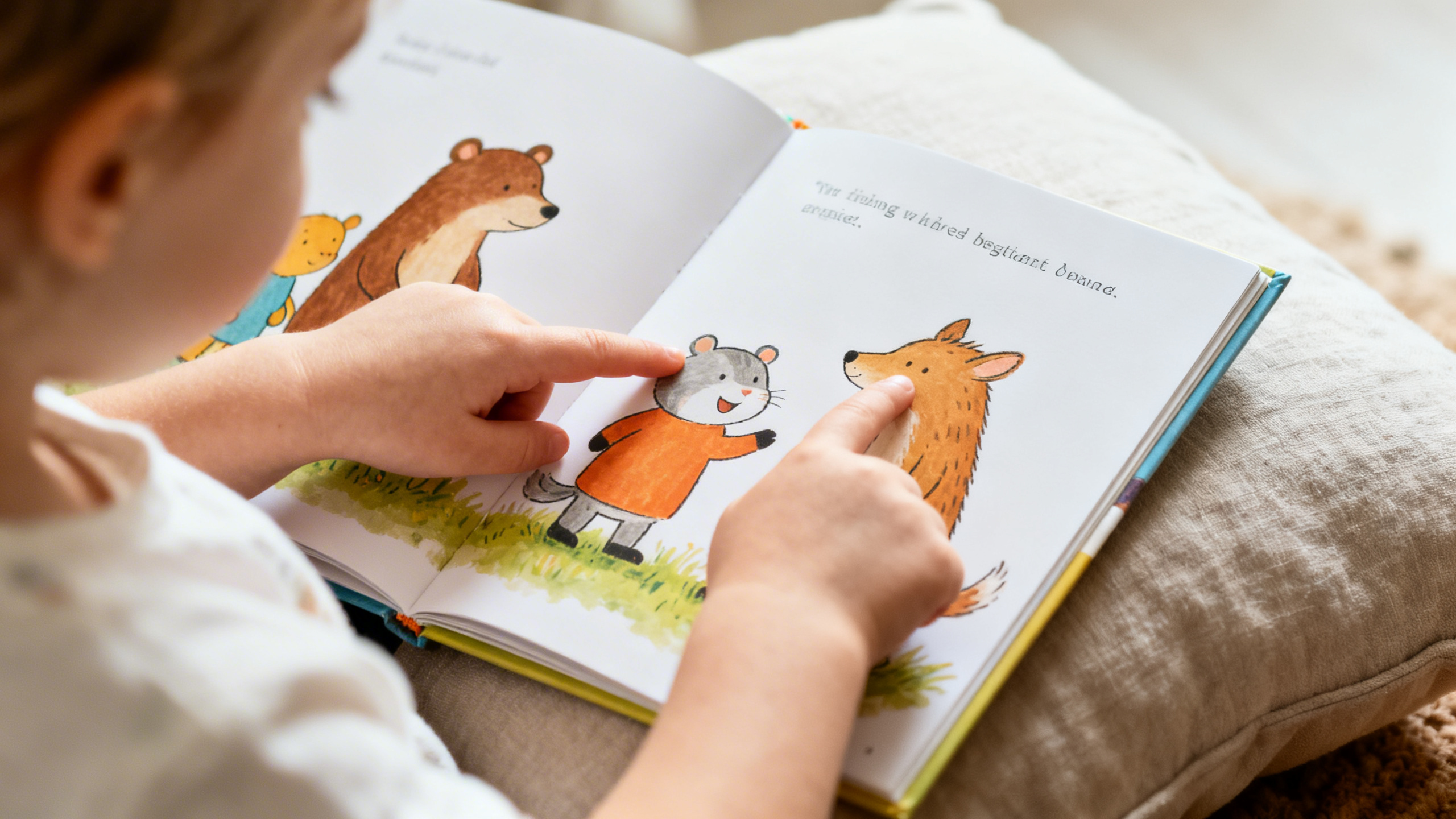
Themes you can create books about
Grief and loss
When a pet dies, a grandparent passes away, or something else difficult happens. A book can explain what death means in an age-appropriate way, and show the child that it's okay to feel sad. Read more about how to help children cope with grief and loss.
Divorce and two homes
When mum and dad don't live together anymore. A personalized book can normalise having two homes, and show the child that both parents love them just as much — no matter what.
Starting nursery or school
The first day at a new place is scary. A book where the child reads about themselves mastering it — finding friends and discovering that the new place is lovely — can make the transition much easier.
A new sibling
Going from being an only child to a big brother or sister is a big change. A book that celebrates the new role and shows there's room for everyone can help the child feel seen.
Illness in the family
When someone in the family is ill for a long time, children need explanations they can understand. A personalized book can be tailored to the exact situation the family is facing.
Tips for using books about difficult topics
- Read the book together — never let the child read about difficult topics alone the first time
- Ask open questions along the way: "How do you think she's feeling right now?"
- Let the child set the pace. Sometimes they want to stop and talk, other times just listen
- Read the book multiple times. Children need repetition to process emotions
- Be honest and simple. Children can handle the truth — it's the uncertainty that's difficult
Why Fanteri is perfect for this
With Fanteri, you can choose the theme, age group, and tone of the story. You can make it light and encouraging, or more calm and reflective. Because AI creates the story based on what you tell it, the book can be about exactly the situation your child is facing — not a generic version of it. Explore more themes in our guide to children's books for difficult life events.
You can also edit the text afterwards, giving you full control over the message. And you can regenerate illustrations until they feel just right.
Sometimes children need a story to understand their own. Give them that gift.
Ready to create a book that helps your child? Get started here.
Frequently asked questions
What age should you start with emotion books for children?
Children can benefit from simple books about emotions from as young as 2-3 years old. Research shows that bibliotherapy is particularly effective for children aged 3 to 8, when they are developing emotional understanding.
Can children's books help with anxiety?
Yes, books are a recognised tool in bibliotherapy. When a child reads about a character experiencing and coping with the same thing, they feel understood and learn indirectly that their feelings are normal.
How do I use books to talk about feelings with children?
Read the book together and ask open questions along the way, such as "How do you think she's feeling right now?" Let the child set the pace and read the book multiple times -- children need repetition to process emotions.
Are personalized children's books better than regular books for explaining emotions?
A personalized book where the child is the main character hits on a deeper level because the child sees themselves in the story. The book can also be tailored to the exact situation the child is facing, which generic books cannot.