7 ways to get your child to love reading
Struggling to get your child to read? Here are 7 research-backed tips that turn reading time into something your child looks forward to — not something they have to do.
The proportion of children who read for pleasure has dropped from 54% to 34% in just twelve years. Screens are taking over, and many parents feel the frustration: how do we get our kids to choose books over tablets? The good news is that there are simple strategies that actually work.
1. Let the child choose
The most important thing you can do is give your child ownership of what they read. Research from the National Literacy Trust shows that children who choose their own books read more often and with more enjoyment. It doesn't have to be "proper" books — comics, fact books about dinosaurs, or a book about the child's own name all count.
2. Make it a routine, not a punishment
Reading time should feel safe and cosy — never a chore. Set it at a fixed time, for example right before bedtime — see our tips for making bedtime reading magical. When the child knows this is "our time together", it becomes something to look forward to. Keep it short for the youngest (5-10 minutes is plenty for a 2-year-old) and let it grow naturally.
3. Read aloud — even to older children
Reading aloud isn't just for babies. Studies show that children up to age 10-12 benefit from adults reading to them. It builds vocabulary, comprehension, and — perhaps most importantly — a positive association with books. Use voices, be dramatic, and make it an experience.
4. Connect reading to your child's interests
Is your child obsessed with space? Find books about planets. Do they love animals? Find animal books. When the content connects to something the child already cares about, the resistance disappears. With personalized children's books, you can take this one step further: let the child decide what the story is about.
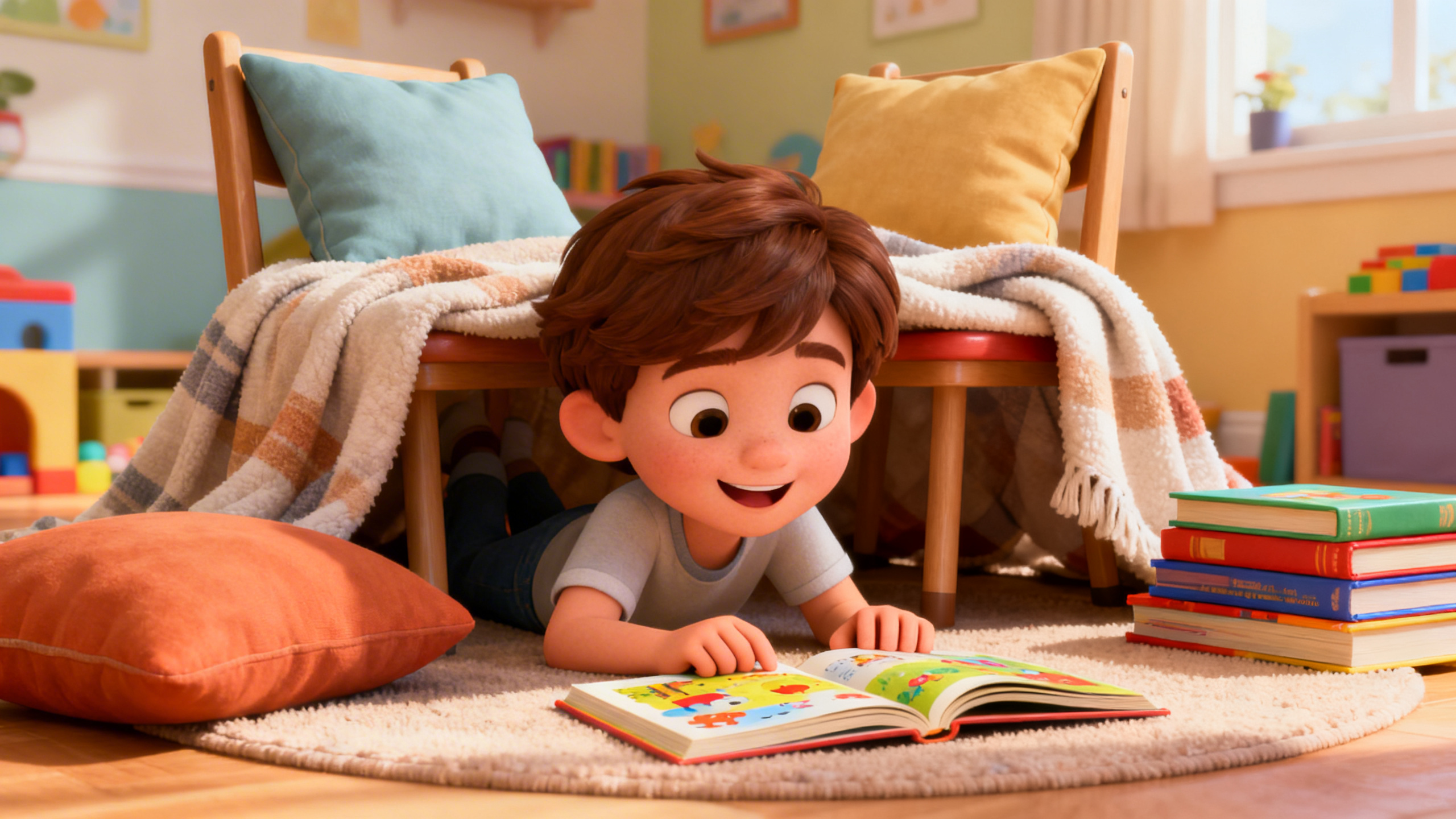
5. Make the child the main character
Research published in the Journal of Applied Developmental Psychology shows that children who read books where they are the main character demonstrate higher engagement and better vocabulary acquisition. It makes sense — it's hard to put down a book that's about you. Read more about why kids love books about themselves.
With Fanteri, your child can be the hero of their very own story. Choose a theme, style, and character — and get a unique book ready in under 10 minutes.
6. Have books everywhere
Children who grow up surrounded by books read more. It doesn't have to be a fancy bookshelf setup. Leave books on the coffee table, in the car, in the bathroom, by the bed. The more accessible books are, the more often they get picked up. The library is also a goldmine — make it a weekly trip.
7. Be a role model
Children do as you do, not as you say. If they see you reading — whether it's a novel, a newspaper, or a cookbook — it normalises reading as a natural part of everyday life. Sit down with your own book while the child reads theirs. It sends a powerful message.
Bonus tip: Create something together
One of the most effective ways to create a love of reading is to let the child help create the content. When a child contributes ideas to a story — "Can we have a dragon that lives in a chocolate mountain?" — they invest emotionally. And a book they helped create is one they'll never put down.
Reading isn't about learning letters. It's about discovering that stories are magical — and that you belong in them.
Ready to try? Create a personalized children's book that your child will want to read again and again.
Frequently asked questions
What age should you start reading to children?
You can start from birth. Even babies benefit from hearing your voice and seeing pictures. From around 6 months, many children begin showing interest in books with strong colours and simple images.
How long should a reading session last for children?
For the youngest (0-2 years), 5-10 minutes is enough. For 3-5-year-olds, 10-20 minutes works well. Let the child set the pace -- the important thing is that it's enjoyable, not that it's long.
What do I do if my child doesn't want to read?
Never force reading. Try connecting books to something your child is already interested in, let them choose books themselves, and make reading time a cosy routine rather than a chore.
What are the benefits of reading to children every day?
Daily reading builds vocabulary, strengthens concentration and comprehension, creates a positive association with books, and provides valuable quality time between parents and children.