Create a Book with Your Child — The Ultimate Creative Quality Time
When your child gets to decide the story and you help bring it to life, something magical happens. Here's how to create a personalized book together — step by step.
Imagine sitting with your child and creating something completely unique — a book where they decide what happens, who's in it, and how it ends. Not a template where you fill in a name, but an actual creative process where your child's imagination leads the way. That's exactly what you can do with Fanteri.
Why co-creation is so powerful
Children who actively participate in creative processes develop stronger ownership of the result. When your child helps decide what the book is about, they feel the story truly belongs to them. It's the difference between receiving a gift and having created something with your own hands.
Research on creative interaction between parents and children shows it strengthens attachment, develops language skills, and gives children a sense of mastery. It doesn't have to be complicated — it's about listening to your child's ideas and taking them seriously. Read our complete guide on how to create your own children's book.
How to do it — step by step
1. Start with a conversation
Ask your child: "If you could be in a story, what would it be about?" Maybe the answer is dinosaurs, spaceships, a magical forest, or rescuing a princess. Don't steer — let them dream. Some kids have a million ideas, others need a little help. You can suggest: "How about a book about the time you met a dragon?"
2. Choose a style together
Fanteri has three illustration styles, and your child gets to pick. Watercolor gives soft, dreamy images with visible brushstrokes. Hand-drawn looks like classic picture books with pencil and crayon texture. 3D has lively, colorful characters inspired by modern animated films. Show your child the examples and ask: "Which one do you see for your book?" It's a simple decision that gives them ownership from the start.
3. Describe the character together
Now it gets fun. Your child describes themselves: "I have brown hair and green eyes!" Maybe they want a superhero cape or a magic wand. Let them add details that make the character truly theirs.
4. Choose a theme and idea
What should the story be about? Let your child decide. You can help shape the idea into something the AI can work with. "How about a book about you and your cat discovering a secret portal in the garden?" Watch their eyes light up.
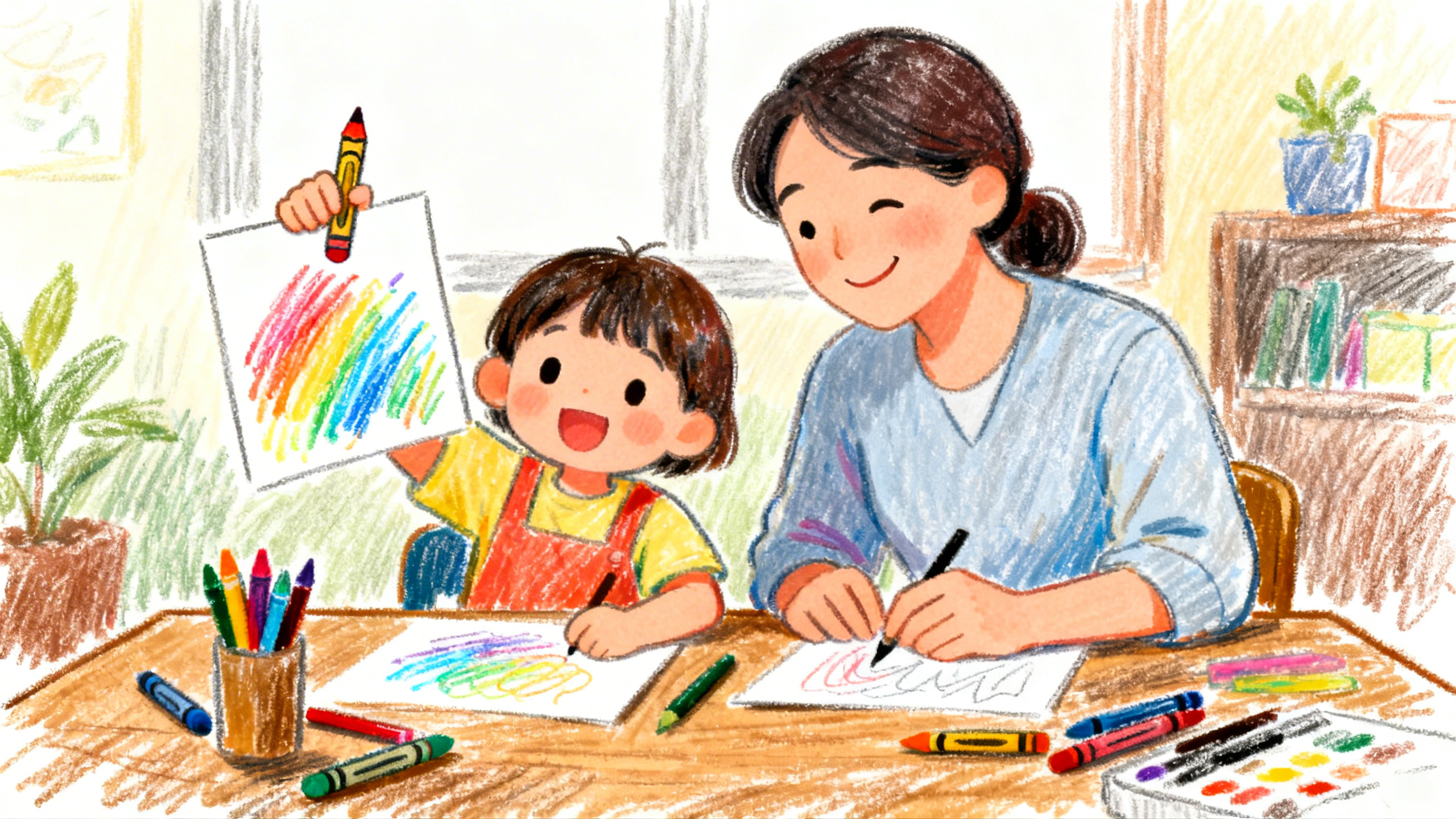
5. Read the finished book together
A few minutes later, you have a finished book with a unique story and illustrations. Reading it together for the first time is a magical moment. Your child sees their own ideas come to life — and this kind of experience can also help children love reading.
Tips for different ages
2-3 years: Keep it simple
The youngest ones can point at pictures and say simple things like "dog!" or "spaceship!" Use that as a starting point. You handle the technical choices, but let them feel they're part of the decision.
4-5 years: Let imagination bloom
Four and five-year-olds have incredible imagination. They can come up with detailed suggestions about what should happen in the story. Take their ideas seriously — the wilder, the better. A princess riding a dinosaur and eating pizza? Perfect.
6-8 years: A more conscious process
Older children can participate in the entire process and make more deliberate choices. They can choose a style, describe the character in detail, and come up with a thoughtful theme. Some may even have their own ideas for the plot. Let them take the lead.
More than just a book
What you create together is more than a children's book. It's quality time, creativity, and a shared experience. Your child will remember that "mom and I made that book" long after they've outgrown bedtime stories. You can also turn vacation memories and everyday magic into a book.
You don't need a rainy day or a special occasion. Just sit down, open Fanteri, and say: "What should our book be about today?"